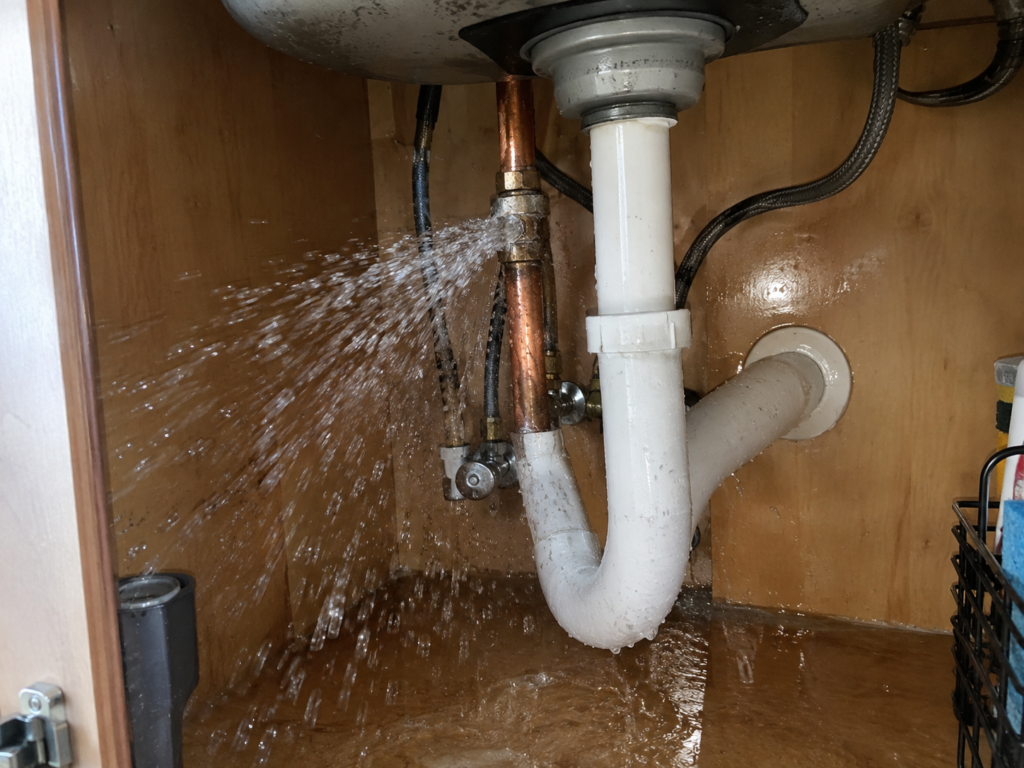
A burst pipe rarely gives warning. One minute your kitchen is dry, the next you’re standing in an inch of water watching it spread toward the hallway. On Long Island, where many homes still run older galvanized or copper plumbing through unheated crawlspaces and exterior walls, burst pipes are one of the most common sources of sudden water damage we see.
This guide walks through why pipes burst, what to do in the first few minutes, and how the repair and cleanup process typically unfolds.
Why Pipes Burst in Long Island Homes
Several conditions tend to show up together in burst pipe cases across Suffolk and Nassau counties:
- Freezing temperatures reaching pipes run through uninsulated attics, crawlspaces, or exterior walls
- Aging galvanized or copper plumbing that has corroded from the inside out
- Sudden water pressure spikes, often after municipal line work
- Tree root intrusion on older underground supply lines
- Physical damage from renovation work or settling foundations
Homes built before the 1980s are especially exposed, since plumbing runs from that era were rarely designed with today’s insulation standards in mind.
The First 15 Minutes: What to Do Immediately
- Shut off the main water valve – usually near the water meter or where the line enters the house
- Turn off electricity to the affected area if water is near outlets or fixtures
- Open a faucet on the lowest level to relieve pressure in the lines
- Move furniture, electronics, and belongings away from the water
- Take photos and video before you start any cleanup, for insurance purposes
- Call for professional emergency water removal once the water source is controlled
Shutting off the water fast is the single biggest factor in how much damage a burst pipe ends up causing. A pipe left running for even 30 extra minutes can push water into subflooring and drywall that would otherwise have stayed dry.
How Burst Pipe Repair Works
Repair isn’t just about fixing the pipe itself – it’s a sequence:
- Locating and stopping the leak. Sometimes the break is obvious; often it’s hidden behind a wall or under flooring, which is where moisture detection scanning comes in before any repair can begin.
- Water extraction. Standing water gets pumped or vacuumed out before it has a chance to soak further into porous materials like drywall and subfloor.
- Structural drying. Industrial air movers and dehumidifiers run for several days to pull moisture out of framing, insulation, and flooring that look dry on the surface but aren’t.
- Repair and rebuild. Depending on how far the water traveled, this can mean anything from patching a section of drywall to replacing flooring and cabinetry.
Common Signs You Might Have a Hidden Pipe Leak
Not every burst pipe floods a room immediately. Watch for:
- Unexplained increase in your water bill
- A hissing or dripping sound inside walls
- Warped, bubbling, or discolored flooring and drywall
- A musty smell without visible water
- Cold spots on walls or floors during winter
If several of these show up at once, it’s worth having the property checked before it turns into a larger residential water restoration job.
Preventing Burst Pipes Before Winter
- Insulate exposed pipes in attics, garages, and crawlspaces
- Keep the thermostat above 55°F even when the house is empty
- Disconnect and drain outdoor hoses before the first freeze
- Let faucets drip slightly during extreme cold snaps
- Know where your main shutoff valve is before you need it
What About Homeowners in Nearby Towns?
Burst pipes aren’t unique to any one neighborhood – we see the same pattern in homes throughout Kings Park, Smithtown, and surrounding Suffolk County communities, especially in older housing stock with original plumbing.
Frequently Asked Questions
How do I know if my pipe actually burst versus just leaking?
A burst pipe usually means active, fast-flowing water and a noticeable drop in water pressure elsewhere in the house. A leak is typically slower and more localized.
Is burst pipe water damage covered by homeowners insurance?
Sudden and accidental pipe bursts are generally covered, though gradual leaks from neglect often aren’t. Check your specific policy, and document everything before cleanup starts.
How long does drying take after a burst pipe?
Structural drying commonly takes 3 to 5 days, depending on how much water was involved and what materials absorbed it.
Can I just dry it myself with fans?
Household fans move air but don’t reduce humidity, so materials can stay damp underneath even when the surface feels dry. That’s why professional drying uses dehumidifiers alongside air movers.
If a Pipe Bursts in Your Home
Every minute matters once water starts moving. If you’re dealing with an active burst pipe anywhere on Long Island, call (844) 711-1304 for immediate help with water removal, drying, and repair.
Leave a Reply