A flood doesn’t end when the water recedes. The real damage structural rot, toxic mold, compromised electrical systems, and destroyed belongings happens in the hours and days after the floodwaters are gone. Nowhere is this more true than on Long Island, where coastal geography, aging infrastructure, and storm surge from Atlantic weather systems can turn a moderate rainstorm into a full-blown disaster.
Whether you’re dealing with the aftermath of a hurricane, a burst pipe, a backed-up sewer, or a flash flood from a nor’easter, this guide walks you through exactly what to do in the critical first 24 hours prioritizing your safety, minimizing damage, and protecting your ability to file an insurance claim.
What’s Covered in This Guide
- Ensure Personal Safety First
- Shut Off Utilities Immediately
- Document Everything
- Contact Your Insurance Company
- Begin Water Removal
- Start the Drying Process
- Prevent Mold Growth
- Salvage What You Can
- Call a Restoration Professional
- Avoid These Common Mistakes
1.Ensure Your Family’s Safety Before Anything Else
Your home and belongings can be repaired or replaced. Your life cannot. Before you set one foot back inside a flooded home, complete these safety checks.
Do NOT re-enter your home if any of the following apply:
- Floodwater is still present or rising
- You hear cracking or see visible structural damage
- You smell gas (call 911 and the gas company from outside)
- Electric lines are down near the property
- Local authorities have issued a “do not enter” order
Long Island sits at the junction of several major storm corridors. According to NOAA’s National Weather Service New York, the region is particularly vulnerable to coastal flooding, storm surge, and flash flooding events especially during hurricane season (June–November) and winter nor’easters.
When you do re-enter, wear protective gear: rubber boots, rubber gloves, an N95 or better respirator mask, and eye protection. Floodwater is almost always contaminated with sewage, chemicals, and pathogens. Even an inch of standing water can carry dangerous bacteria.
Long Island Flood Safety Resources
Nassau County Emergency Management: nassaucountyny.gov | Suffolk County: suffolkcountyny.gov
2.Shut Off Utilities Immediately
Floodwater and electricity are a lethal combination. Shut off your home’s main circuit breaker before entering even if the power appears to be out. Utility power can be restored unexpectedly while you’re inside.
Turn off electricity at the main breaker
If the breaker box is in a flooded area, call PSEG Long Island (psegliny.com) to cut power remotely before entering. Never wade through water to reach an electrical panel.
Shut off the main water supply
This stops additional water intrusion from burst or damaged pipes. The shutoff valve is usually near the water meter, often in the basement or utility room.
Turn off gas at the meter
If you smell gas, leave immediately and call 911. Do not use any switches, phones, or anything that could create a spark inside the property. Contact National Grid (nationalgridus.com) for Long Island gas emergencies.
Confirm all utilities are off before proceeding
Keep a utility shutoff checklist on your fridge or in your go-bag. Knowing where these valves and switches are before a disaster is critical preparedness.
3.Document Everything Your Insurance Claim Depends on It
Before you move a single piece of furniture or throw anything away, document the damage thoroughly. This is one of the most common mistakes homeowners make: they start cleaning up immediately and lose the photographic evidence their insurance adjuster needs.
Flood Damage Documentation Checklist
- Photograph and video every room from multiple angles before touching anything
- Capture water lines (high-water marks) on walls and door frames
- Document all damaged furniture, appliances, electronics, clothing, and valuables
- Photograph the exterior: foundation, siding, roof, garage, yard
- Write down serial numbers of damaged appliances before disposal
- Save all damaged items until your insurance adjuster visits
- Keep receipts for all emergency expenses (hotel, supplies, temporary repairs)
- Note the time and date flooding began and ended (texts from neighbors help)
Upload your photos to cloud storage immediately so they’re preserved regardless of what happens to your phone or devices. The Federal Emergency Management Agency (FEMA) and private insurance carriers both require thorough documentation to process claims efficiently.
Pro Tip: Create a video walkthrough
A narrated video – “Here is the living room carpet, you can see the waterline is about 8 inches up the baseboard…” is often more compelling to adjusters than photos alone. Narrate out loud what you’re seeing.
Related Resources from Akron OH Water Damage
- Water Damage Restoration Services in Ohio
- Flood Damage Cleanup & Recovery
- Mold Remediation After Water Damage
4.Contact Your Insurance Company Right Away
Most homeowner’s policies have specific reporting windows. Calling your insurer early even before you know the full extent of the damage establishes your claim date and gets an adjuster scheduled sooner.
One critical distinction Long Island homeowners need to understand: standard homeowner’s insurance does NOT cover flood damage. Flooding from external sources (storm surge, overflowing rivers, heavy rainfall) is covered only by flood insurance, typically through the National Flood Insurance Program (NFIP) or private flood insurance carriers.
Know what your policy covers BEFORE calling
- Homeowner’s policy:Covers burst pipes, appliance leaks, roof damage from rain
- Flood insurance (separate policy):Covers external flooding, storm surge, overland flow
- Sewer backup rider:Required for backup/overflow coverage (not standard)
Keep a record of every communication with your insurance company: dates, times, the name of the representative, and what was discussed. If your claim is denied, this paper trail is essential for appeal.
5.Begin Water Removal as Quickly as Possible
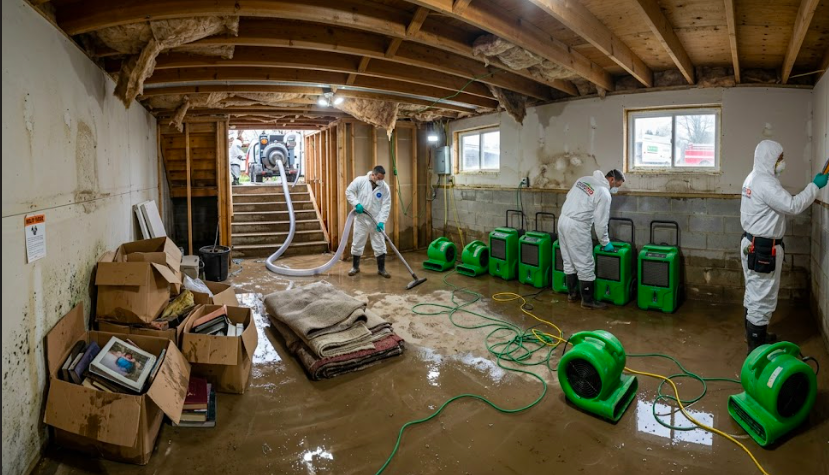
Standing water is your enemy. Every hour it sits in your home, it soaks deeper into subfloors, drywall, and insulation dramatically increasing drying time, structural damage risk, and mold likelihood.
If you have access to a wet/dry shop vac or submersible pump, begin removing water immediately. For significant flooding (more than 2 inches), a professional-grade water extractor is needed this is where calling a certified water damage restoration company makes a major difference.
“The difference between a $15,000 restoration and a $60,000 one is often measured in hours. Water that sits for 24 hours begins destroying structural components that water removed in the first 6 hours would have spared entirely.”
Industry principle, aligned with IICRC S500 Standard for Water Damage Restoration
The Institute of Inspection, Cleaning and Restoration Certification (IICRC) sets the professional standard for water damage restoration across North America. Their S500 standard classifies water damage into three categories and four classes knowing these helps you understand what you’re dealing with:
Water Damage Categories (IICRC)
- Category 1 – Clean Water: Broken supply lines, faucets, toilets (no contaminants)
- Category 2 – Grey Water: Dishwasher overflow, washing machine discharge, minor flooding
- Category 3 – Black Water: Sewage, floodwater from rivers/storms requires professional remediation
Most Long Island flood events involve Category 3 black water due to storm surge and sewage system overflow. This type of water damage requires professional treatment it cannot be safely handled with household tools alone.
6.Start the Drying Process Aggressively
Water removal and drying are two different steps. Even after all visible water is removed, materials like drywall, wood framing, subfloor, and insulation retain moisture and that’s where long-term damage and mold begin.
- Open windows and doors: (weather permitting) to increase airflow
- Run fans and dehumidifiers: in every affected room the goal is to get relative humidity below 50%
- Remove wet rugs and carpeting: saturated carpet is a mold incubator and rarely worth saving after a flood
- Pull up wet baseboards: to allow drying behind walls
- Remove cabinet doors: to dry cabinet interiors
- Move wet furniture outside: or to a dry, well-ventilated area
Don’t use heat to speed drying
Running a furnace or space heater in a flooded space raises humidity and promotes mold growth rather than preventing it. Use cool airflow and dehumidification, not heat.
Professional restoration companies use industrial air movers and commercial-grade desiccant dehumidifiers that move 10–20x more air than consumer units. For significant flood events, these tools are often the difference between saving and replacing structural components.
7.Prevent Mold Growth Before It Starts
Mold is the silent aftermath of flooding. It can begin colonizing within 24-48 hours in wet drywall, wood, and insulation and once established, a mold infestation requires professional remediation that can cost tens of thousands of dollars. Preventing mold is dramatically cheaper than treating it.
According to the U.S. Environmental Protection Agency (EPA), mold requires three things to grow: moisture, organic material (drywall, wood, fabric), and warm temperatures. Remove the moisture and you stop mold before it starts.
Mold Prevention Steps
- Remove all wet materials: carpet, padding, drywall, insulation, particle board
- Clean hard surfaces with a solution of 1 cup bleach per gallon of water
- Run dehumidifiers continuously until relative humidity is below 50%
- Discard any porous materials (mattresses, upholstered furniture) that absorbed floodwater
- Inspect HVAC ducts floodwater in ductwork spreads mold throughout the home
- Check crawl spaces moisture migrates downward and accumulates in poorly ventilated areas
- Schedule a professional mold inspection within 72 hours of a major flooding event
If you suspect mold is already present visible dark spots, a musty odor, or residents experiencing respiratory symptoms contact a certified mold remediation specialist immediately. Learn more about our mold remediation services if you’re in the Ohio area.
8.Salvage What You Can – Carefully
Not everything in a flooded home is a total loss, but what you can save depends heavily on the flood category and how quickly you act.
Generally salvageable (with prompt action):
- Hard-surface furniture (wood, metal) – clean and dry promptly
- Documents and photos – gently rinse and air dry, or freeze for later restoration
- Clothing and linens – machine wash with detergent and disinfectant
- Non-porous items (glass, ceramic, plastic) – clean with diluted bleach solution
Usually NOT worth salvaging after Category 3 flooding:
- Carpets and rugs (contaminated and difficult to fully dry)
- Mattresses and upholstered furniture
- Particle board furniture (absorbs water and breaks down)
- Drywall that was submerged (must be cut out and replaced)
- Insulation (loses R-value and harbors mold)
- Any food items that were in contact with floodwater
For irreplaceable items like family photos, heirlooms, and important documents, professional document restoration services may be able to recover more than you’d expect. The Northeast Document Conservation Center (NEDCC) provides free guidance on salvaging water-damaged documents and photographs.
9.Call a Certified Water Damage Restoration Professional
DIY flood cleanup has real limits and pushing those limits can make things significantly worse. Here’s when professional help isn’t optional:
- Any Category 2 or Category 3 water intrusion (grey water, black water, sewage, storm surge)
- Flooding that affected electrical systems, HVAC, or structural components
- Water damage covering more than 10 square feet
- Any visible mold growth or musty odors
- You don’t have industrial drying equipment available
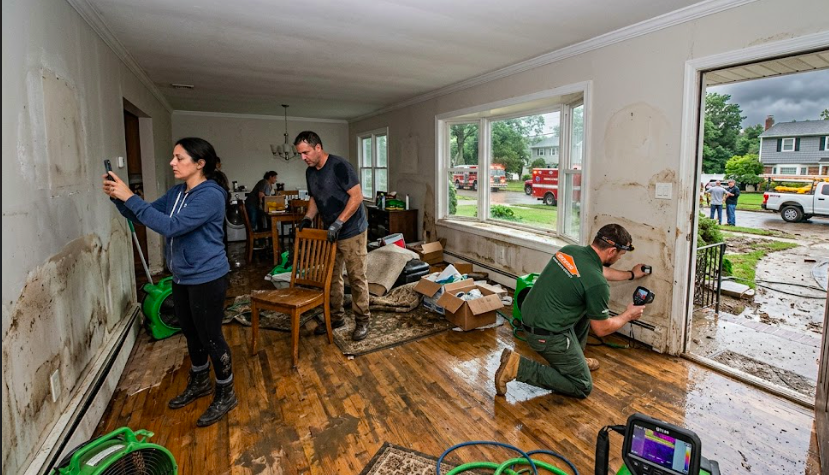
A licensed restoration company look for IICRC-certified professionals brings thermal imaging cameras, moisture meters, and industrial drying systems that allow them to detect hidden moisture pockets in walls and subfloors that are invisible to the naked eye. Missing these areas is how “dry” homes end up with catastrophic mold problems 2–3 weeks later.
What to ask a restoration company before hiring:
- Are you IICRC-certified in water damage restoration?
- Are you licensed and insured in this state?
- Do you work directly with insurance companies?
- What is your average response time for emergency calls?
- Do you use thermal imaging and moisture mapping equipment?
While our primary service area covers Akron and Northeast Ohio, we understand the stress of flood events wherever they happen. Our flood damage cleanup resources page has guidance and referral assistance for homeowners outside our service zone.
10.Common Flood Recovery Mistakes That Cost Thousands
In the chaos of dealing with flood damage, homeowners make predictable mistakes that compound the damage and complicate insurance claims. Here are the most costly ones to avoid:
The Bottom Line: Speed and Expertise Are Everything
Flood damage is a race against time, biology, and physics. Mold doesn’t wait. Wood rot doesn’t wait. The longer water stays in contact with your home’s materials, the more expensive and extensive the damage becomes. The good news: homeowners who act quickly, document thoroughly, and bring in certified professionals early dramatically improve their outcomes both in terms of what can be saved and how much their insurance covers.
Long Island’s unique geography barrier islands, bays, glacially-carved terrain, and proximity to the Atlantic makes it one of the flood-vulnerable regions in the Northeast. Ready.gov, the federal emergency preparedness platform, recommends all coastal homeowners have an active flood response plan before storm season, including knowing your local evacuation routes, having an emergency kit, and knowing your utility shutoffs.
Whether you’re in Long Island or anywhere in Ohio Akron, Cleveland, Canton, or beyond the same principles apply. If you’ve experienced flooding and need professional help, our team at Akron OH Water Damage is available around the clock.
Ohio Homeowner? We’re Here 24/7.
From Akron to Cleveland and across Northeast Ohio, our IICRC-certified team responds to water damage emergencies fast with the equipment and expertise to minimize damage, prevent mold, and get your home back to normal.
Leave a Reply